Custom sending domains with SPF, DKIM, and DMARC. Tracking domains with HTTPS-by-default via Let's Encrypt. FBL handlers for AOL, Yahoo, and Microsoft. Bounce processors that classify soft / hard / OOO. IP warmup webhooks. Auto-pause when bounce rate spikes. The entire deliverability stack — not a marketing claim, an actual feature surface.
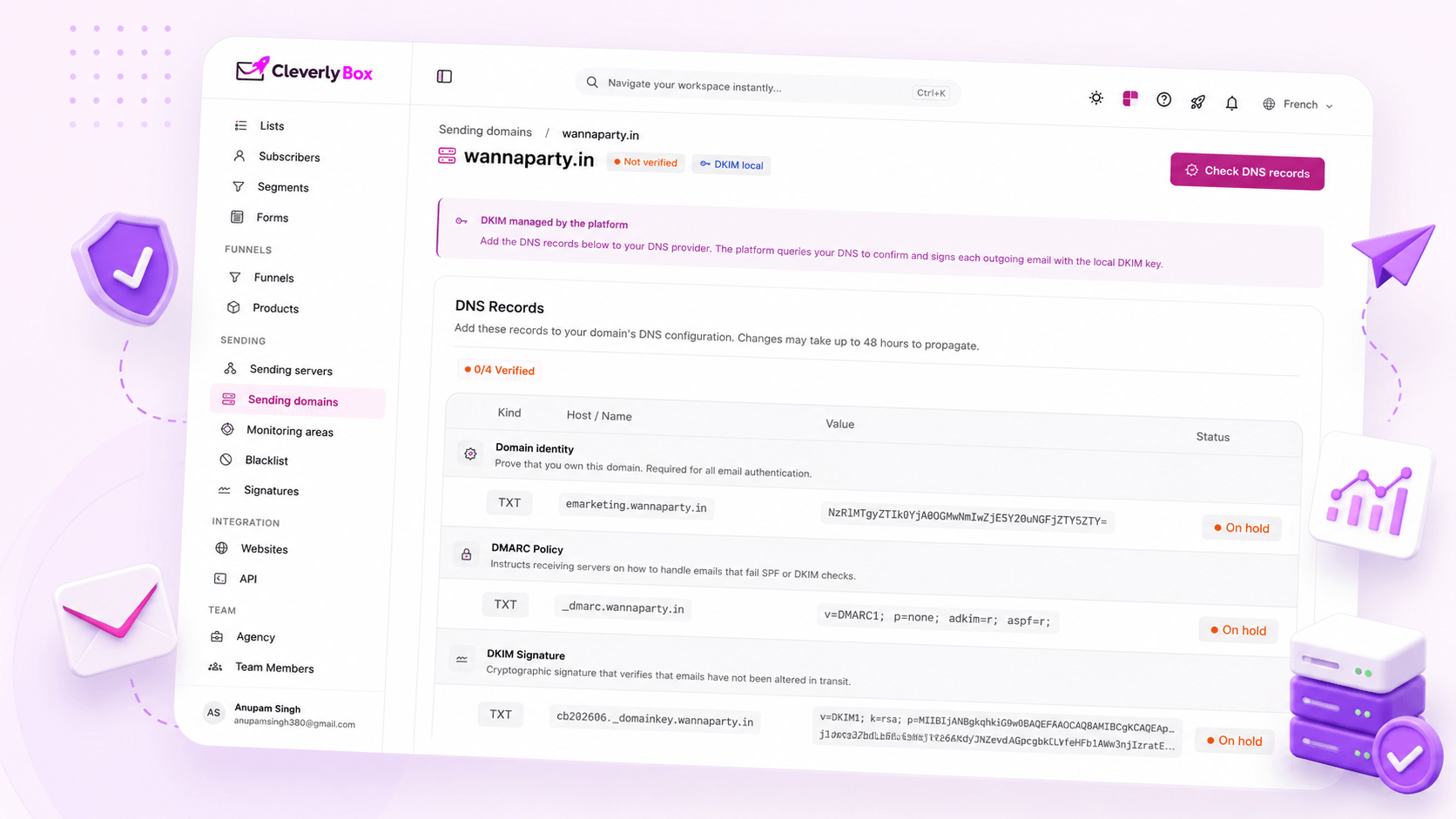
We surface the signals that matter most. Diagnose issues before they cost you replies. And give you complete control over your infrastructure, content, and sending reputation.
Mailchimp / Klaviyo configure SPF / DKIM in the background. You never see the records. When deliverability tanks, you have nothing to inspect — just a "we're looking into it" support ticket that closes in 4 days.
You're on a shared IP with hundreds of other senders. One spammer in the pool tanks the reputation. Your perfectly-permissioned newsletter lands in spam — and you have no idea it was someone else's send that did it.
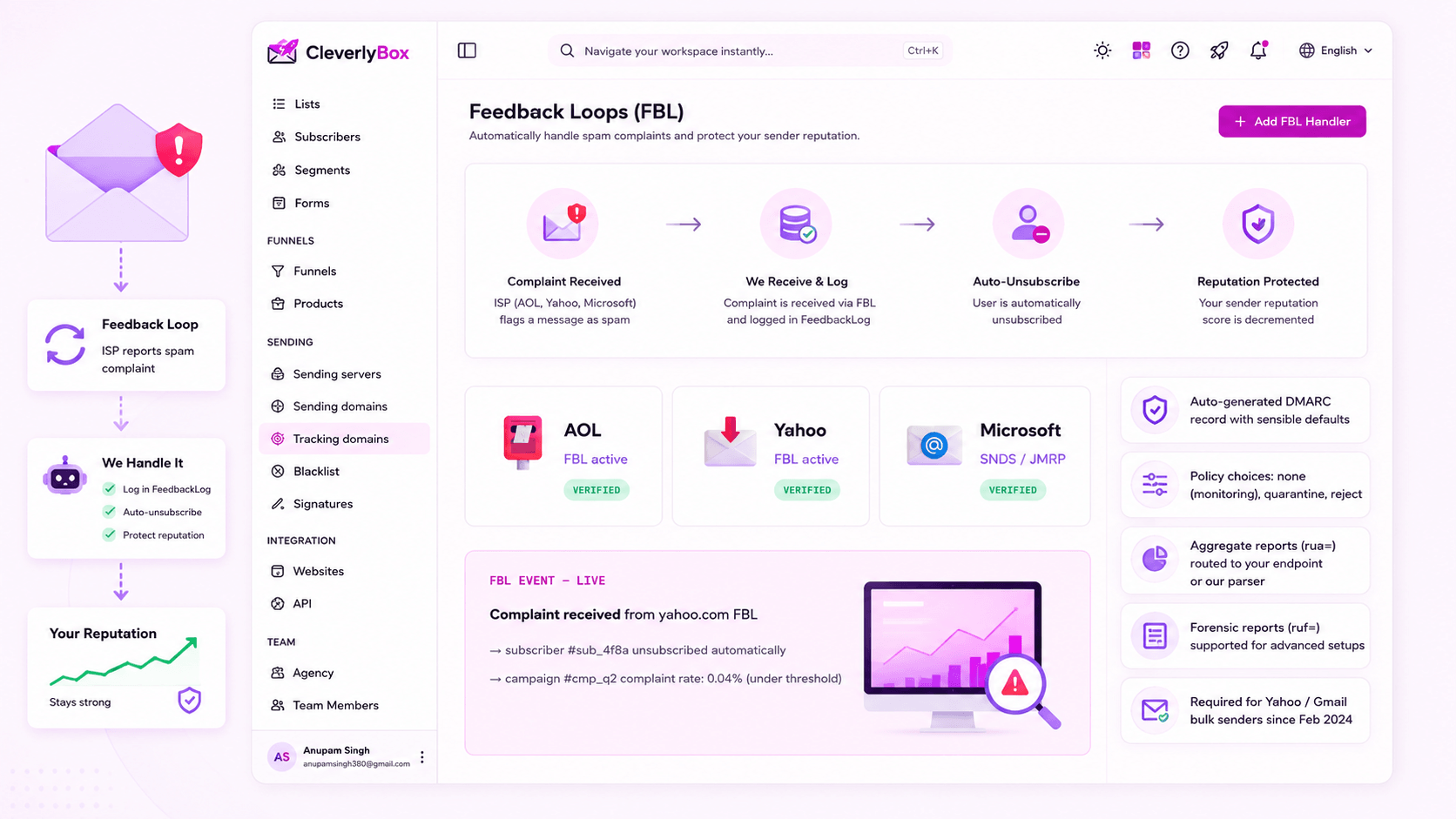
When AOL or Yahoo subscribers hit "Spam," the FBL fires. On most ESPs, you never see the rate. You never see who complained. The reputation degrades silently — and your future sends suffer.
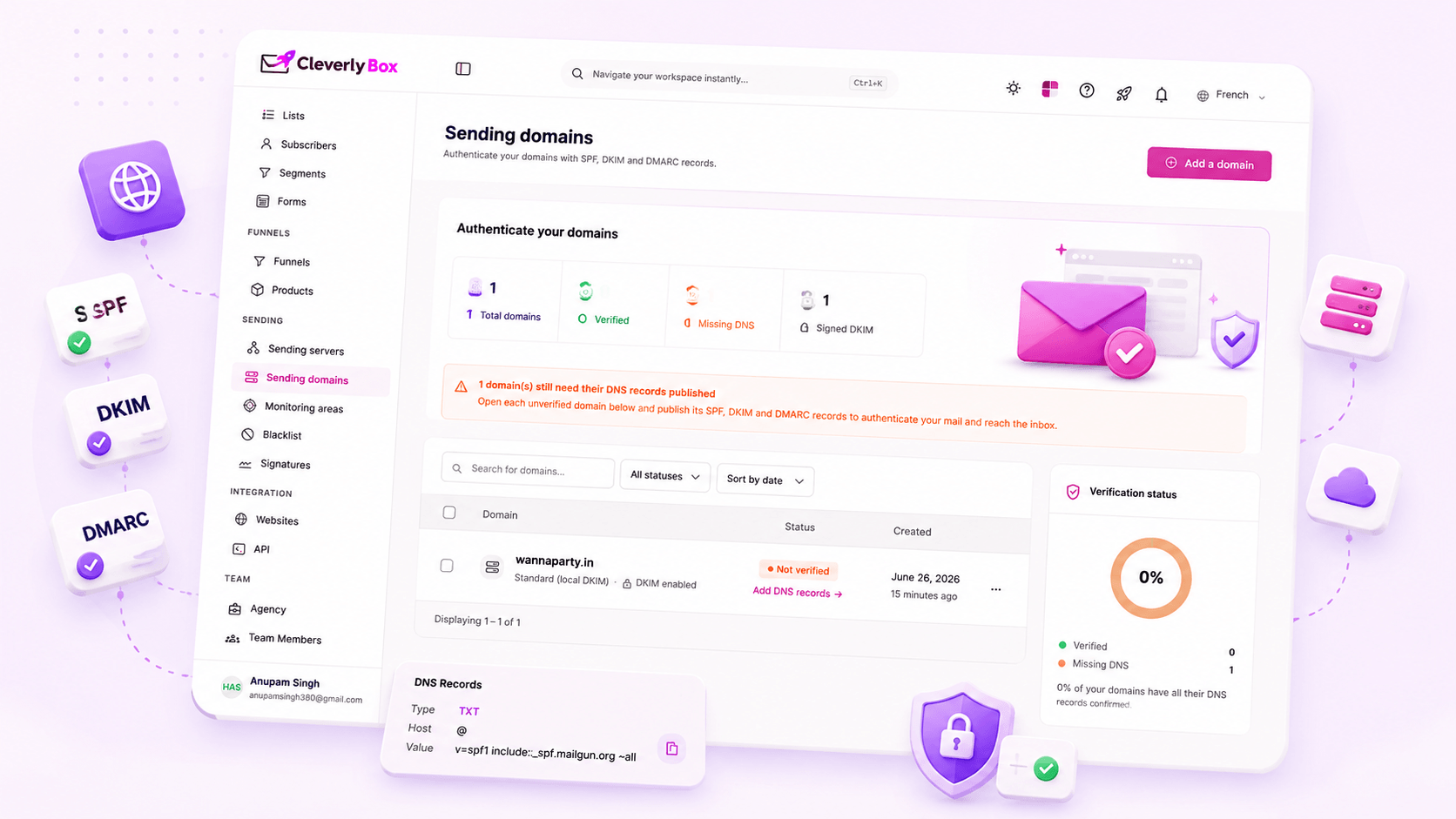
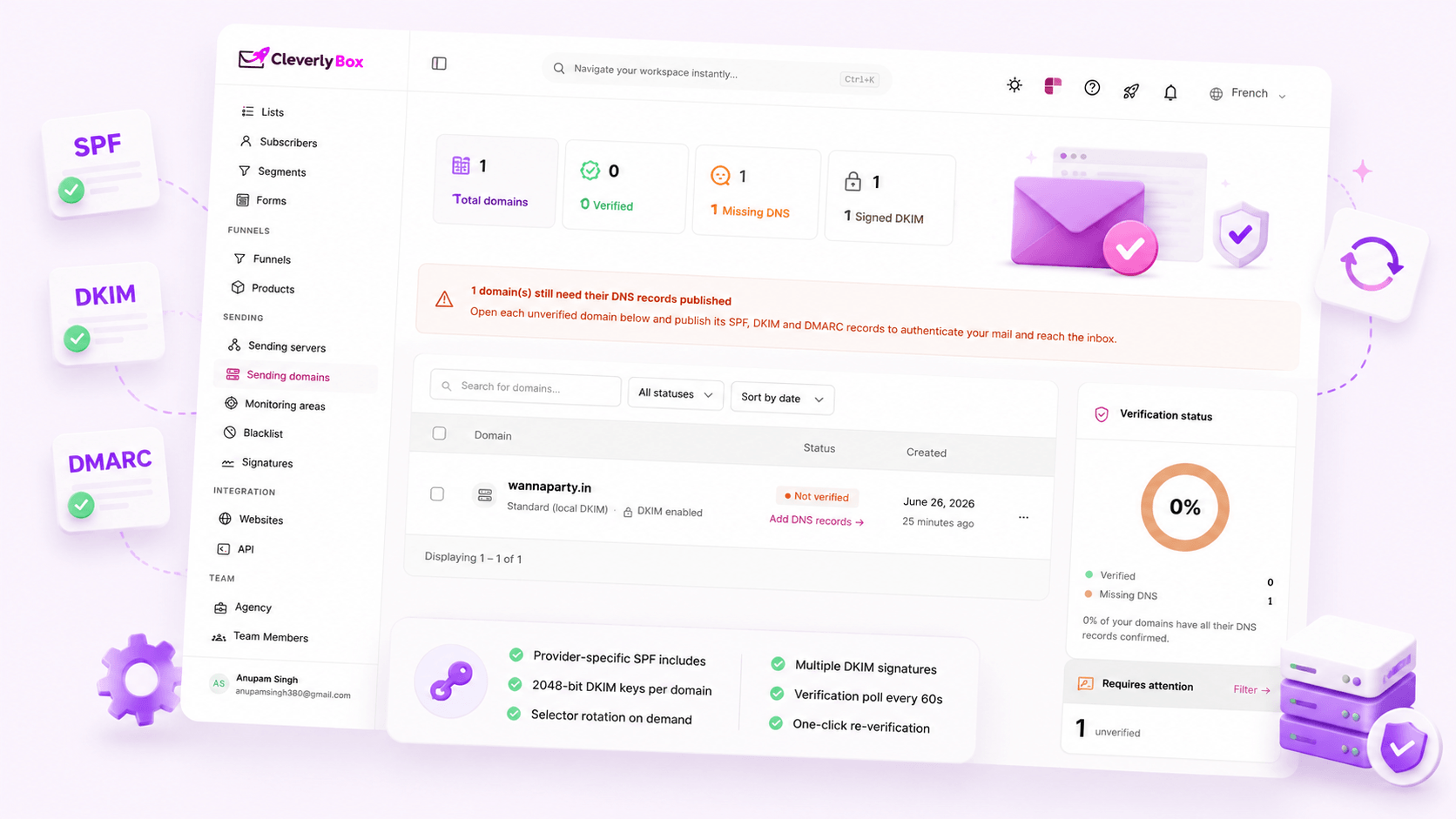
Add your domain (mail.acme.com, send.acme.com — your choice). The platform generates the exact DNS records you need to copy into your DNS provider's panel. Cloudflare, Route 53, GoDaddy paste, save, verify in CleverlyBox. Your emails now show up as "from Acme" instead of "from Acme via mailgun.net."
SPF and DKIM are easy to get wrong by hand wrong include, wrong selector, wrong key length. CleverlyBox generates the exact records for the sending provider you've connected (SES, SendGrid, Mailgun, etc.) and rotates DKIM keys on demand. Paste the values, hit Verify, ship.
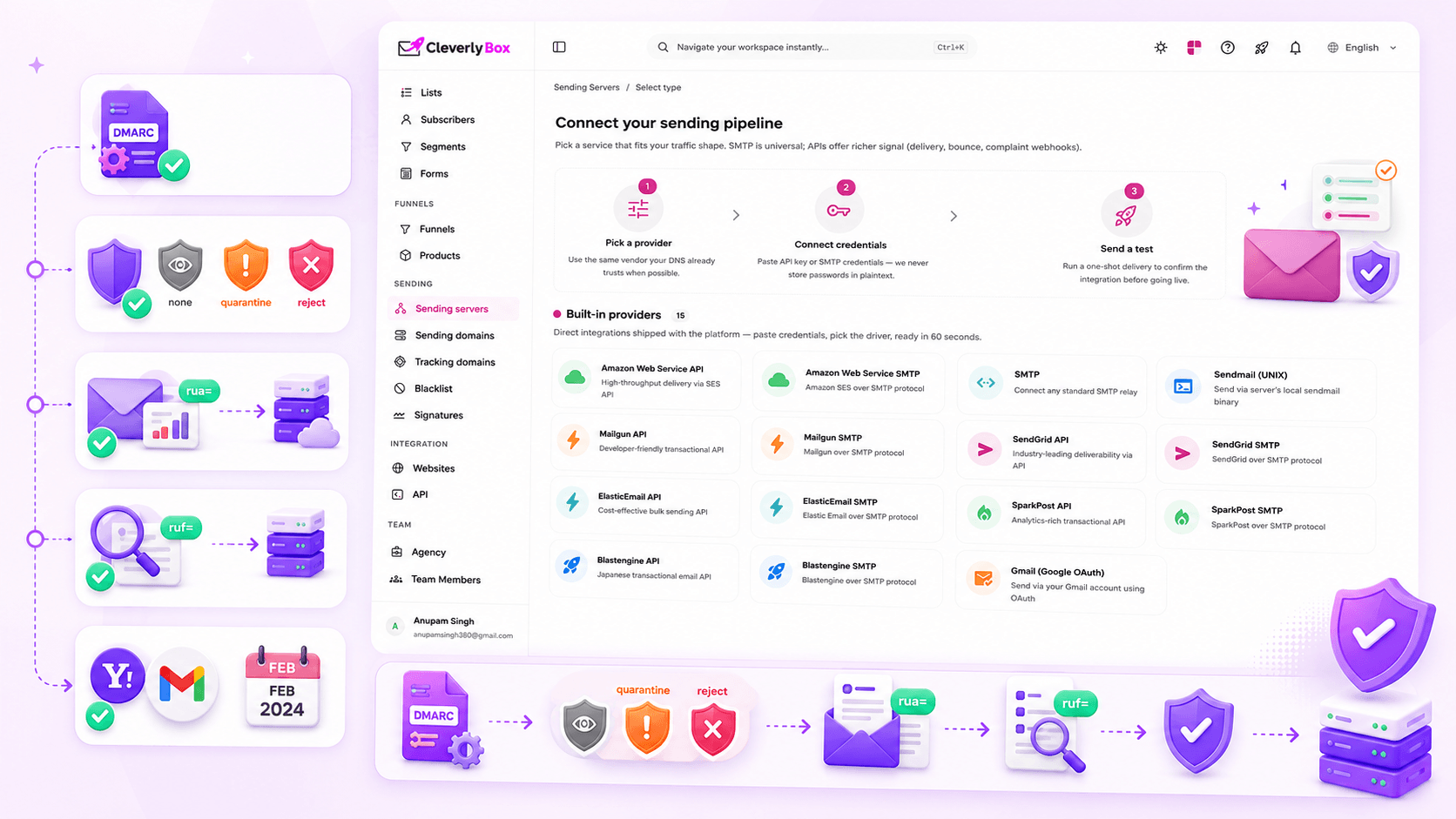
DMARC is the policy layer above SPF and DKIM. It tells Gmail, Yahoo, and Outlook: "if mail claiming to be from acme.com fails alignment checks, here's what to do — quarantine, reject, or just report it to me." Without DMARC, anyone can spoof your domain. With DMARC + p=quarantine, you've shut the door on most domain spoofing attacks.
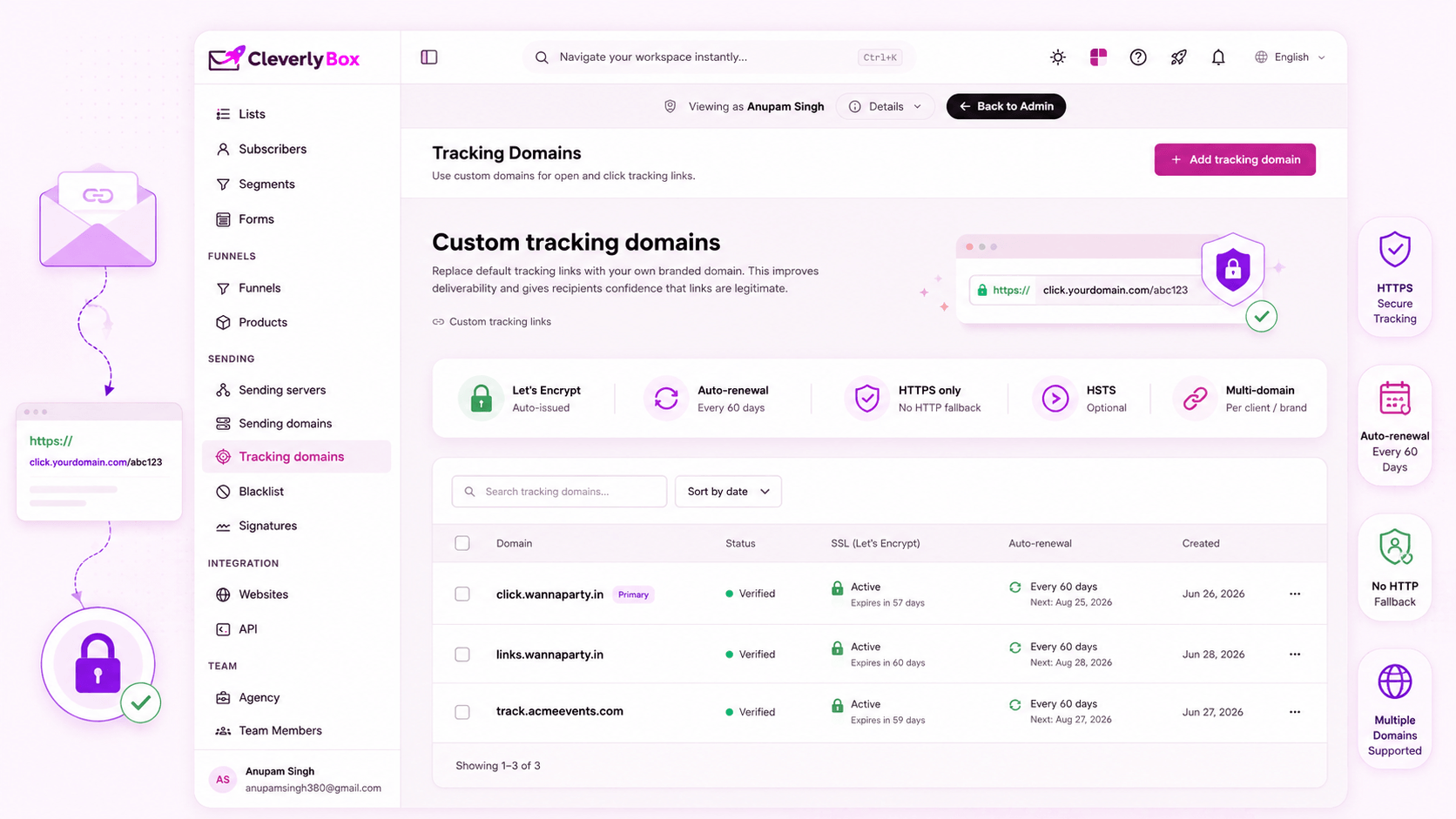
Click-tracking links in your emails go through a tracking domain clicks.acme.com instead of cleverlybox.com/c/abc123. CleverlyBox issues a Let's Encrypt cert for your tracking domain automatically and rotates it on the standard 90-day schedule. No HTTP-fallback. No "your connection is not private" warnings in Gmail's preview pane.
Feedback Loops (FBL) are the industry mechanism by which major ISPs report user-flagged spam complaints back to the sender. CleverlyBox runs FBL handlers for AOL, Yahoo, and Microsoft — the moment a recipient hits "Spam," we receive the complaint, log it to FeedbackLog, auto-unsubscribe the user, and decrement your sender reputation in our internal scoring.
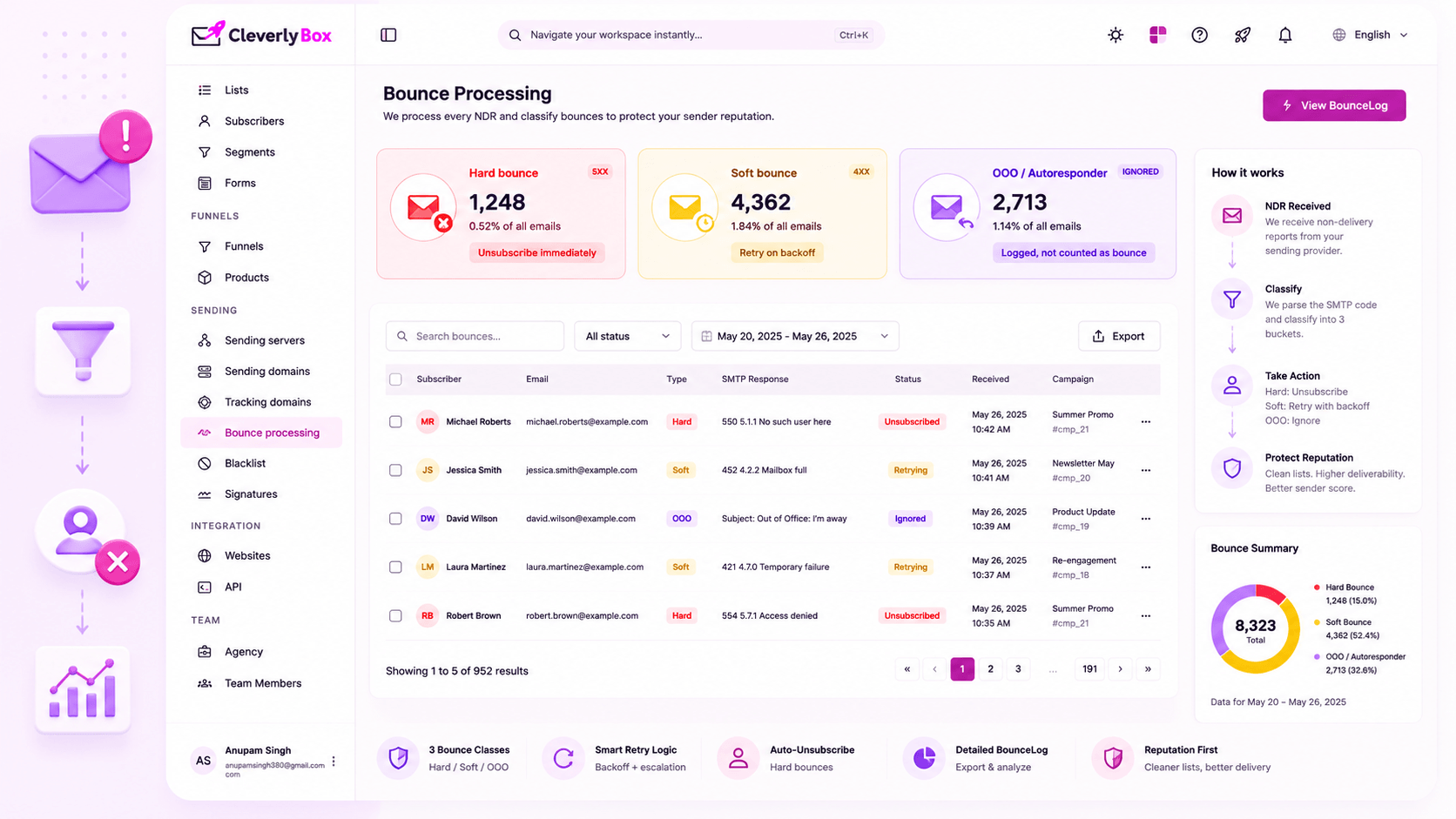
The bounce handler ingests every NDR (non-delivery report) from your sending provider, parses the SMTP response code, and classifies the bounce into one of three buckets. Hard bounces unsubscribe immediately a permanent failure. Soft bounces retry on a backoff schedule. OOO replies are detected and ignored, never confused with real bounces.
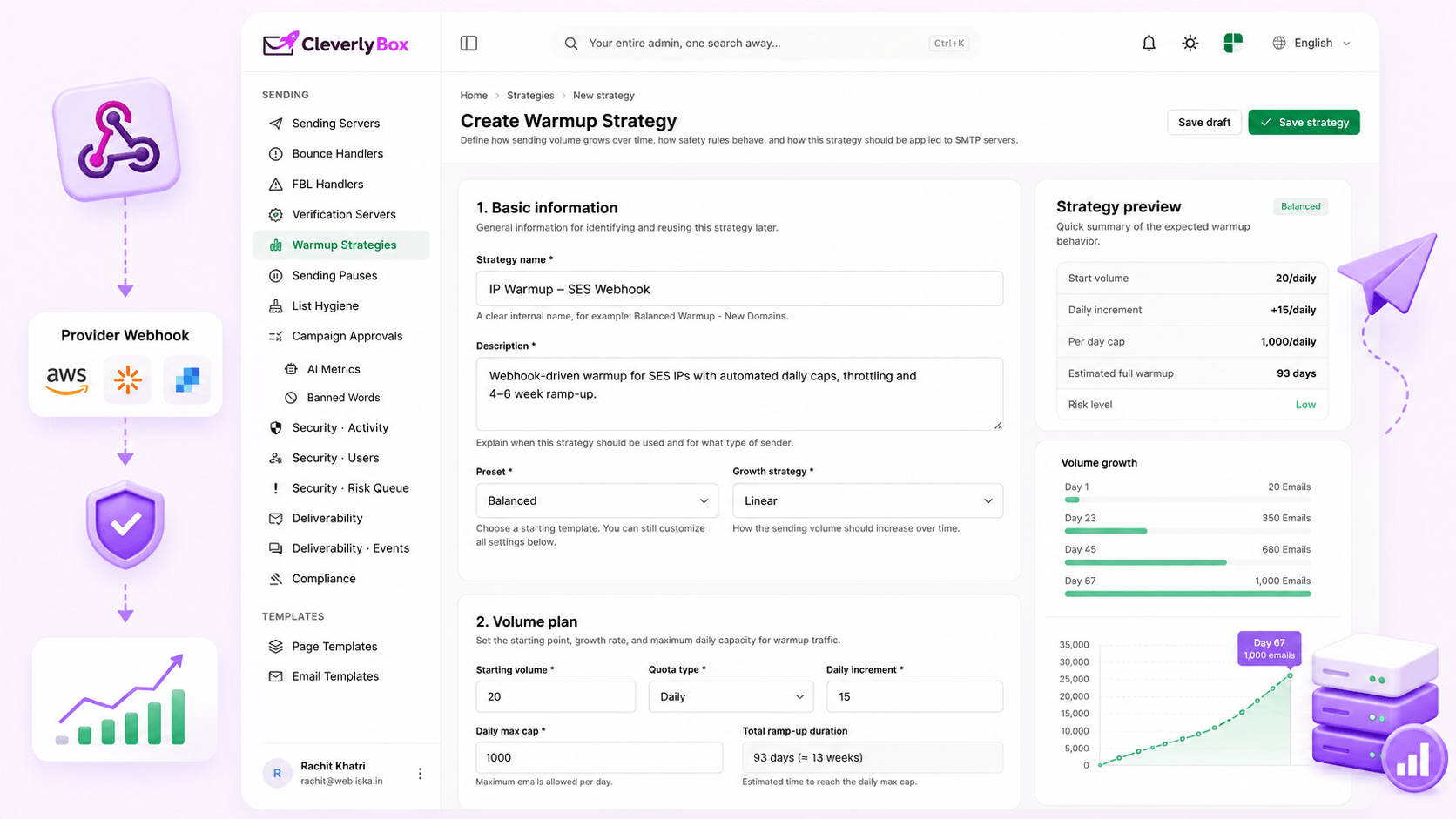
New IP from SES or SendGrid? You can't blast 100,000 emails on day one ISPs treat that as a spam signature. CleverlyBox integrates with your provider's IP warmup schedule via webhook: it tracks your daily volume cap, gates outbound sends to stay within it, and ramps up over the standard 4–6 week schedule.
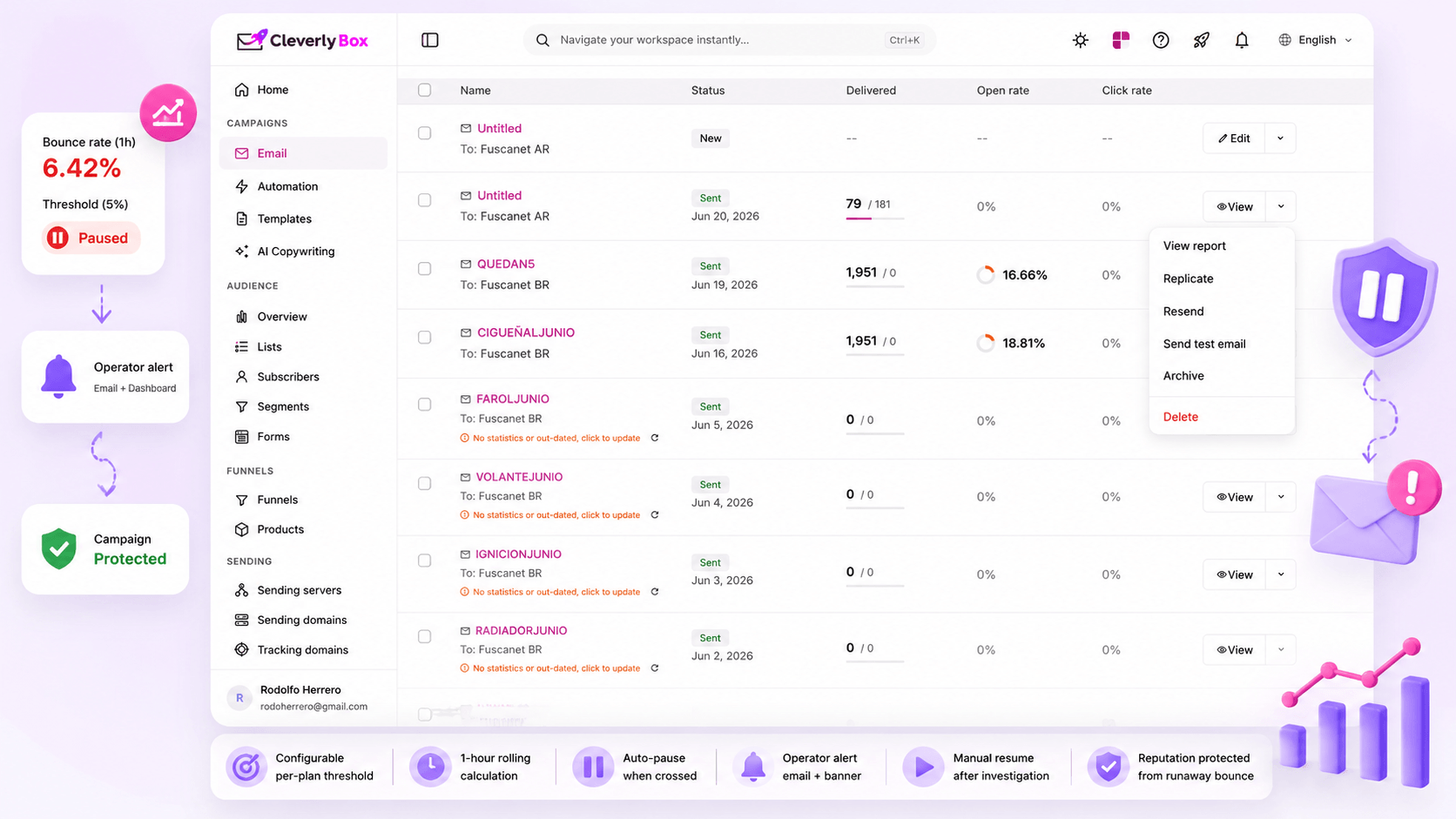
Industry standard is to keep bounce rate under 5% (Gmail and Microsoft start penalizing above 2%). CleverlyBox sets a per-plan threshold and monitors rolling bounce rate during a send. Cross the threshold mid-campaign? The send pauses automatically — saving your reputation before the ISP blocks you outright. Operator gets an alert to investigate.
Here's the end-to-end setup, in order. From "I just bought CleverlyBox" to "my first campaign is hitting Gmail's primary tab" usually takes 30–90 minutes — most of which is waiting for DNS to propagate.
Pick from 14 supported providers — SES, SendGrid, Mailgun, SparkPost, etc. Paste API key (or SMTP credentials). Provider is now ready to relay outbound mail.
mail.acme.com or send.acme.com — your call. Platform generates SPF, DKIM, Return-Path, DMARC records. You'll see them in the DNS panel.
Open Cloudflare / Route 53 / GoDaddy. Paste the four records. Save. DNS propagates in 5–60 minutes — usually closer to 5.
click.acme.com or links.acme.com. CNAME record points at our tracking endpoint. Let's Encrypt cert auto-issues within minutes of DNS verification.
Send to your own Gmail / Yahoo / Outlook addresses. Check headers — you should see SPF=PASS, DKIM=PASS, DMARC=PASS. Tracking links should be HTTPS. If yes — you're inboxing. Now scale.
Land more emails, protect your domain, and build sending infrastructure that scales.